Sophisticated threats. Constrained resources. We help you understand where you stand, build what’s genuinely missing, test whether it holds - and prove it’s getting better.


You're stretched too thin. The threats evolve daily. Your budget hasn't. Somehow you're expected to protect everything, educate everyone, and justify every pound spent.
Most organisations are being held to enterprise expectations without the team, budget, or breathing space to match. And the security industry doesn't help - it thrives on complexity, acronyms, and fear. We don't.
You're past the point where a basic antivirus and good intentions are enough. The threat surface is real and growing.
Enterprise solutions assume a dedicated security team, massive budgets, and months to implement. You have none of those.
Every tool is sold as essential. Every vendor promises transformation. You need someone to cut through it - not add to it.
The board speaks business risk, not CVEs. You need outcomes that translate - not technical reports nobody reads.
You've invested in tools, controls and services. But nobody has ever actually tested whether they'd hold - and that's a difficult question to answer when the board asks.
Understand it. Build it. Test it. Improve it. Prove it. Five stages that turn security from a set of purchases into something you can actually evidence - anchored by the Security Maturity Assessment, and measured against it every time round.
Next time, the list is shorter.
We come back to the start - but not to the same place. Each cycle begins from a stronger position than the last.
Koncise is an award-winning cybersecurity partner with a single operating principle: do right by customers, even when it conflicts with short-term revenue. Fourteen years of practising that has led to a 99% client retention rate and relationships that last decades.
Six specialisms, working together as one cohesive strategy. Most clients start with one or two and expand as budget and maturity allow.
Everything above is a control you’ve chosen to trust. Security Validation is where we find out whether that trust is justified - testing the technology, the people and the processes that sit around it. Some of that is penetration testing. Some of it is phishing simulations and tabletop exercises. All of it produces evidence rather than assumptions.

Real-world testing of networks, infrastructure, web applications and APIs - establishing what can genuinely be reached and exploited.
Explore penetration testing →Goal-led exercises across people, technology and physical or process controls. Not “what’s wrong here”, but “could someone actually achieve this”.
Explore adversary simulation →Establishing whether your monitoring and response genuinely detect, escalate and act on realistic attacker behaviour.
Explore detection validation →Start with a Security Maturity Assessment. No sales pitch - just clarity.
No pitch. No pressure. Just a conversation.
This page isn't a sales pitch. It's a reality check. If you read this and think "finally, someone who gets it" - that's because we do.
These aren't personas we made up. They're the people we talk to every week.
You need to justify cybersecurity spending in business language, not technical jargon. Every board meeting feels like defending security rather than advancing strategy. You're expected to translate technical risk into financial exposure - without a translation guide.
You're expected to do more with less while the threat landscape grows daily. The pressure to be everywhere at once is unsustainable. You need a partner who extends your capacity - not another tool to babysit.
You're caught between the security team's requirements and your users' expectations. Every control adds friction. Every approval process adds delay. You need security that enables - not obstructs.
Security investments are sold on fear, not financial returns. You can't quantify cyber risk the same way you assess other business risk - and vendors aren't helping. You need numbers, not nightmares.
"Every leader I speak to is carrying the same weight - too much responsibility, too few resources, and a board that expects certainty in an uncertain world. We built Koncise around that reality. My job is to make sure you're never left trying to figure it out alone. From day one, we embed ourselves alongside your team, translate the technical into the commercial, and make sure that every engagement drives a measurable outcome you can actually stand behind."
Koncise Leadership Team
Customer Appreciation Golf Day
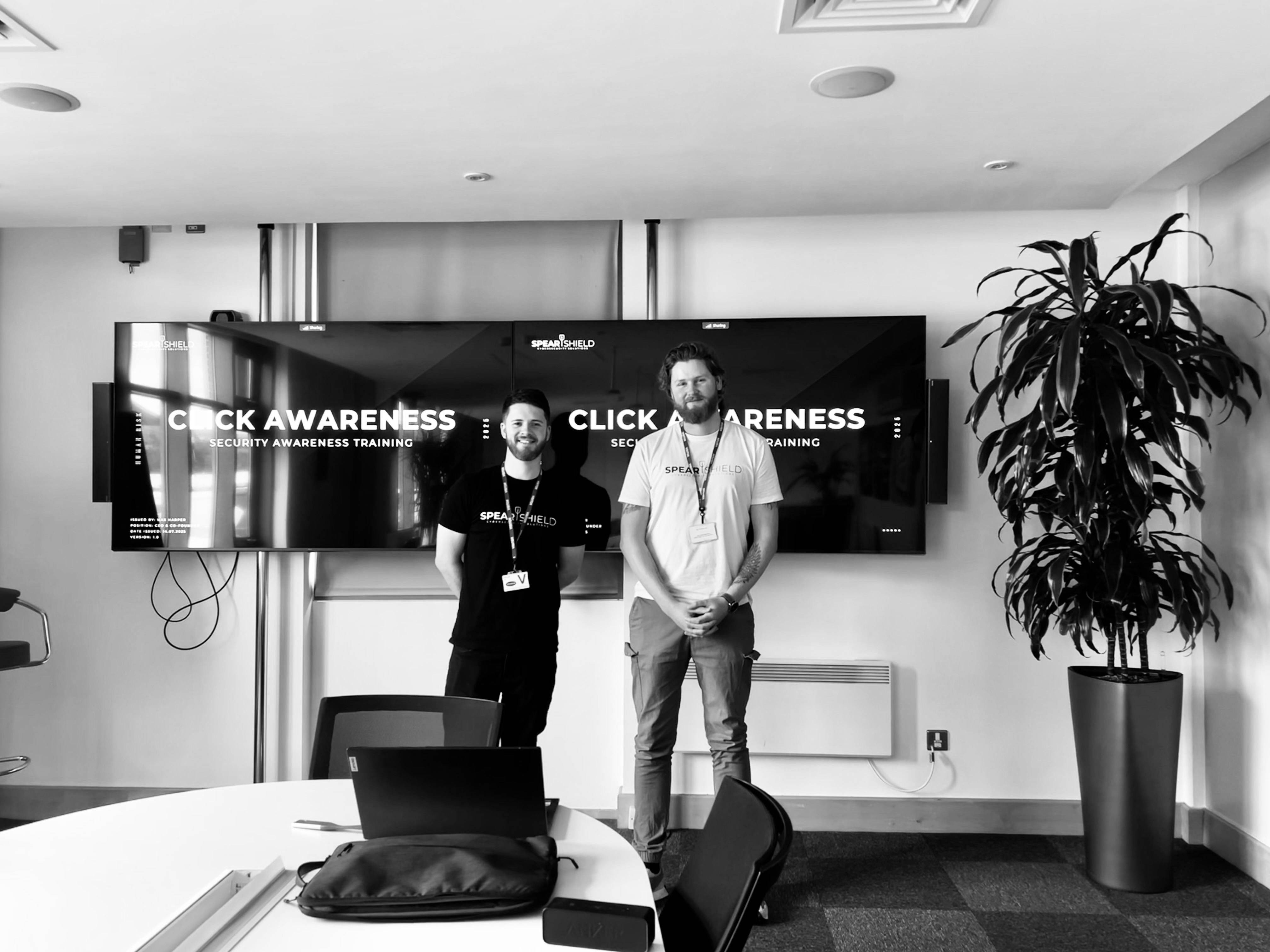
On-Site User Awareness Training
"Koncise acts as our trusted cybersecurity adviser. They conducted an in-depth phishing simulation exercise, providing us with a comprehensive report and strategic advice to enhance our defences. By working with Koncise to deploy a full intelligent email security platform, we simultaneously enhanced both our inbound and outbound defences. It's fantastic to work with a single provider that can do both - the process was incredibly easy and collaborative."
If you're carrying cyber risk with limited time, limited resource, and a long list of competing priorities - you're not doing anything wrong. Most organisations are being held to enterprise expectations without the team, budget, or breathing space to match.
That's the gap we were built to fill.
Let's talk about your situationPeople, Process, Technology - mapped to NCSC CAF, NIST, and CIS. Built for IT Leaders, by people who understand your constraints.
Get StartedDesigned for lean IT teams who need outcomes, not noise. Defence-in-depth without turning security into a second full-time job.
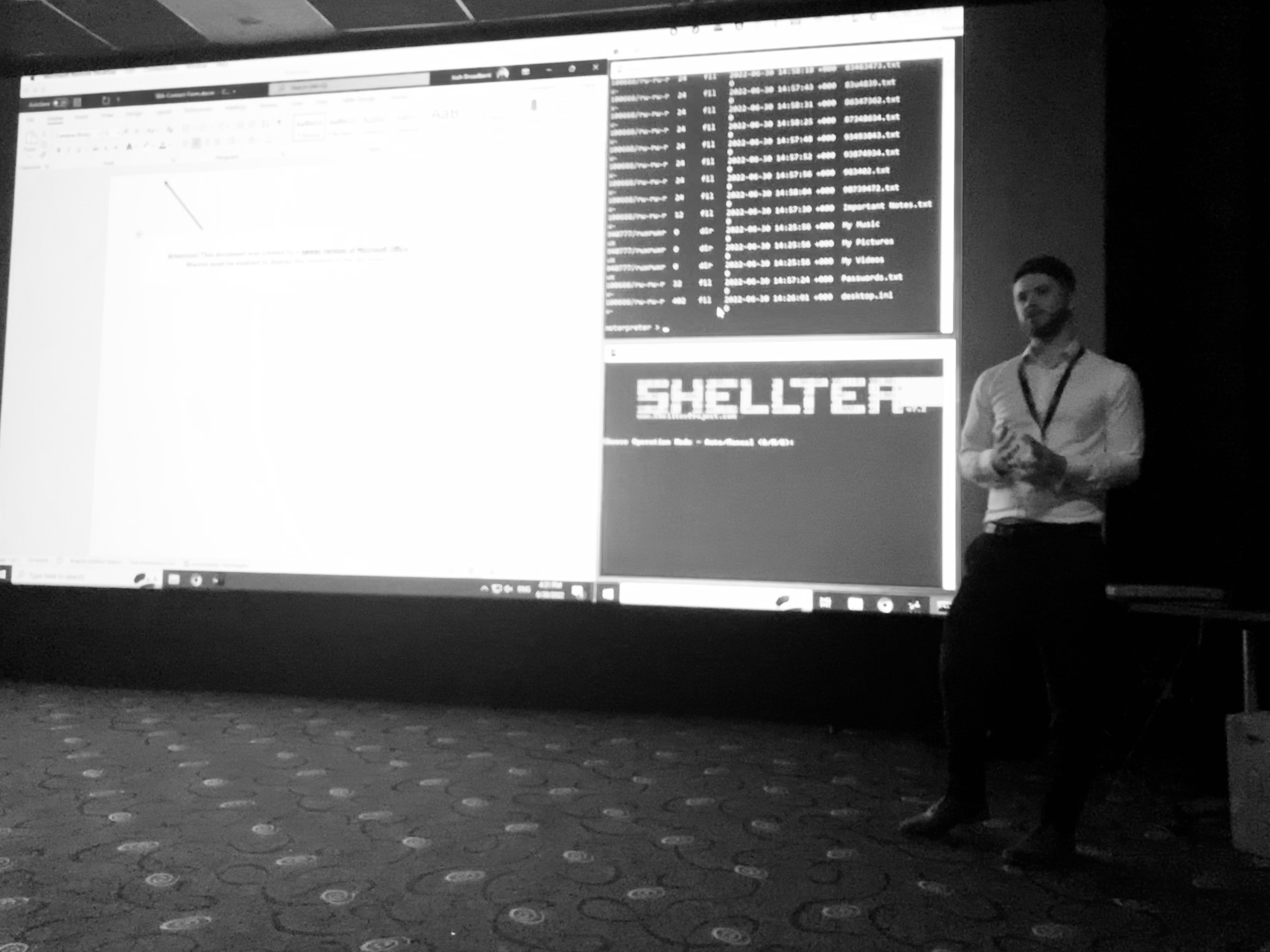
Live Security Sessions
The Koncise Team
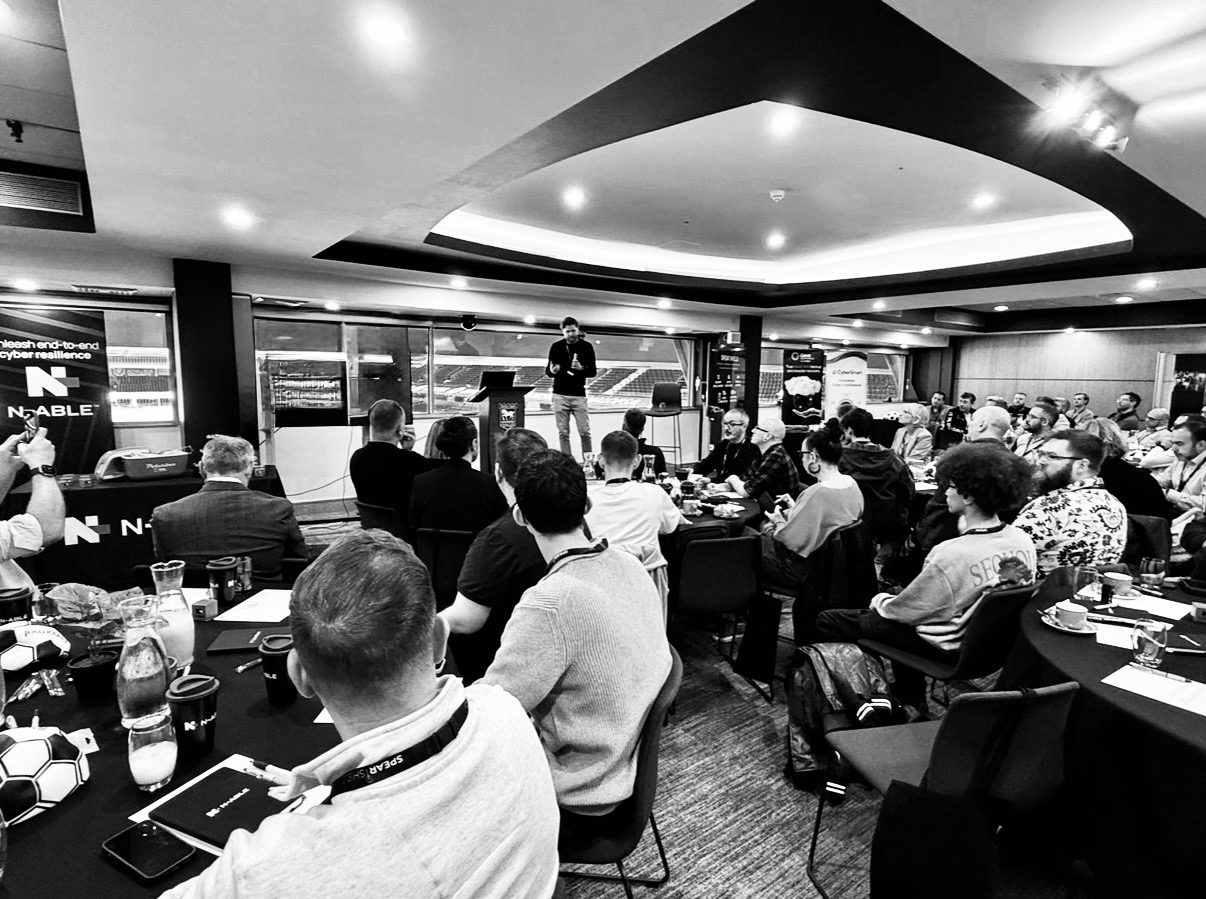
Security Awareness Events
If you're juggling tooling, incidents, and stakeholder expectations, you don't need another generic checklist. You need a baseline you can trust - and a clear view of what to prioritise next.
A clear, evidence-led baseline across people, process, and technology - no guesswork, no hand-waving.
We translate findings into clear next steps: fix first, fix next, and what can wait until budget or resource allows.
Exec-friendly outputs that help you secure resource, justify spend, and move faster internally.
"As a fast-growing business, we needed a security solution that could scale with us and provide 24/7, year-round protection for our global network of people and data. Koncise worked closely with us from pre-sales to post-sales support, ensuring we were fully set up. It's great to have one less thing to worry about knowing that we have a team of cybersecurity experts hunting and responding to cyber threats on our behalf."
Understand it. Build it. Test it. Improve it. Prove it. The portfolio below is Step 02 - but it only works because of the four steps around it.
Know where you stand before you spend.
Build what’s actually missing.
Coverage built. Now let’s try to break it.
Fix what testing proves matters.
Prove the improvement is real.
Next time, the list is shorter.
Six specialisms, working together as one cohesive strategy. Most clients start with one or two and expand as budget and maturity allow.
Faster detection and containment. Less downtime. Clearer accountability.
When threats land - and they will - you need detection that doesn't sleep and response that doesn't wait for Monday morning. Our 24/7 MDR service monitors your environment around the clock, with human analysts and automated response working together to contain incidents before they escalate.
·
·
·
·
·
·
·
·
·
·
·
·
Would we actually see it - and would we respond?
Fewer successful attacks. Stronger reporting culture. Measurable behaviour change.
Your people are both your biggest vulnerability and your strongest defence. We send over 30,000 simulated phishing emails per year on behalf of our clients - giving us deep insight into human risk patterns and what actually drives lasting behaviour change.
·
·Koncise·
·
·
·
·
·Koncise·
·
·
·
Could someone successfully manipulate one of our people or processes?
Reduced data exposure. Safer sharing. Stronger governance.
Data loss incidents are rarely dramatic. They're slow, silent, and costly. We help you understand where your data lives - across cloud, email, and endpoints - and make sure it stays there, with controls that don't get in the way of how people work.
·
·
·
·
·
·
·
·
·
·
Can information be reached that shouldn’t be?
Fewer account takeovers. Cleaner access control. Reduced privilege sprawl.
Identity is the new perimeter. Compromised credentials are the most common attack vector across every sector we work in. We lock this down with layered controls - from MFA and conditional access to full identity threat detection - without making your users' lives miserable.
·
·
·
·
·
·
·
·
·
·
·
·
·
·
·
·
What can one compromised identity actually give an attacker?
Fewer exploitable gaps. Faster remediation. Better resilience.
Most breaches exploit known vulnerabilities. Staying ahead of your attack surface is unglamorous work - but it's where real resilience is built. We manage patching, harden configurations, and protect your data against loss and ransomware with enterprise-grade backup and disaster recovery.
·
·
·
·
·
·
·
·
·
·
·
·
·
·
·
·
What is exposed - and what is genuinely exploitable?
Board-ready evidence. Clear priorities. Audit confidence.
Compliance shouldn't be a box-ticking exercise - it should build real security. Our assessments give you an independent, evidence-backed view of where you stand and a roadmap that prioritises what to do next, turning security from a cost centre into a conversation you can have at board level with confidence.
Can we evidence that things are getting better?
Broader technology needs, handled by the same trusted team.
The six pillars are a set of controls you’ve chosen to trust. Validation is where we find out whether that trust is justified. We challenge the assumptions made during Build - across technology, people and process - and replace them with evidence.
Technology. External and internal infrastructure, web applications and APIs - tested for what can genuinely be reached and exploited.
Explore penetration testing →People and process. Social engineering, physical security testing and goal-led red team engagements where they genuinely add value.
Explore adversary simulation →Response. Whether your monitoring genuinely detects, escalates and acts on realistic attacker behaviour - or simply generates reports.
Explore detection validation →Testing isn’t a separate discipline bolted onto the side. It asks a direct question of every pillar you’ve invested in.
Testing produces a list. The useful part is deciding what actually needs doing, and in what order. Findings feed straight back into the roadmap - and not every one of them costs money.
A significant share of findings are resolved by changing something you already own. Where that’s true, we say so plainly rather than quoting for it.
Targeted coaching, awareness intervention, or a change to a process that turned out to be easier to talk your way past than anyone expected.
Tuning what already exists so it sees the right things, and changing the design where the weakness is structural rather than a setting.
Every finding stands on its own. We report what we found, what it means and what needs to change - independently of whether you buy anything else from us. Where the fix is a configuration change that costs nothing, we’ll tell you. Where we can help, we’ll mention it once and leave the decision with you.
Your team can action the whole list themselves and the report is just as valid. That’s the point of it.
The outcome of a complete security strategy isn't a stack of tools. It's an organisation that operates with clarity, confidence, and resilience.
“It’s better now” isn’t a position you can take to a board, an insurer or an auditor. These are.
Next time, the list is shorter.
Then we go back to the assessment and start again - from a stronger position than last time. That’s the whole point of the cycle.
The Security Maturity Assessment is designed for exactly that moment. Let's find your baseline together.
Start a ConversationWe work with a carefully selected portfolio of best-in-class vendors across each area of our security practice. We are vendor-agnostic - we recommend based on what fits your environment, risk profile, and budget, not on margin or reseller incentives.
Detect & Respond 24/7
N-able, CrowdStrike, Arctic Wolf, Rapid7, Halcyon, Sophos
Phishing & Human Risk
Koncise Managed Phishing Service, Koncise Cyber Academy Online User Training, KnowBe4, Abnormal, Egress, Mimecast, Sendmarc, Redsift
Data Security & Prevention
Dope Security, KnowBe4, SimplyDiscover, Proofpoint
Identity & Access
Ploy, Okta, ZeroFox
Patch, Protect & Harden
N-able, CrowdStrike, Sophos, Automox, Tenable, Traced
Compliance & Resilience
Koncise Security Maturity Assessment, CyberSmart
You’ve invested in tools, controls and services. Validation is how you find out whether they hold. We test the technology, the people and the processes around them - and give you evidence instead of assumptions.
Both matter, at different points. One gives you breadth. The other gives you certainty about a much narrower slice. Most organisations need both, and confusing them is how gaps survive an audit.
A structured review of your configuration, policies and controls against what good looks like. Thorough, low-risk, and it covers everything - a Security Maturity Assessment, a Microsoft Security Review, a vulnerability assessment. It tells you where you stand on paper.
Narrower by design. We ignore the documentation and try to achieve something - reach a system, compromise an account, talk our way past a process. It only reports what we actually found. But what it finds is real, and it’s evidence.
Validation isn’t a standalone purchase. It sits between building your security and proving it improved - and it’s what makes the last step possible.
Know where you stand before you spend.
Build what’s actually missing.
Coverage built. Now let’s try to break it.
Fix what testing proves matters.
Prove the improvement is real.
Next time, the list is shorter.
Which one you need depends on the question you’re trying to answer. We’ll tell you honestly which that is - including when the answer is “not this one yet”.
Networks · Infrastructure · Web Applications · APIs
Scoped technical testing of a defined environment. Answers: where are the weaknesses here, and what can actually be done with them?
Explore penetration testing →People · Physical · Technical
Goal-led testing that uses whichever route works. Answers: could someone actually achieve this - and would we notice?
Explore adversary simulation →MDR · EDR · SIEM · Response
Testing the defender rather than the attack. Answers: if this happened, would anyone have seen it in time?
Explore detection validation →Attackers don’t restrict themselves to your infrastructure, so validation shouldn’t either. Some of this is new capability. Some of it Koncise has been delivering for years.
External and internal penetration testing, web application and API testing, detection validation, and confirming whether known vulnerabilities are genuinely exploitable in your environment.
Managed Phishing simulations, targeted social engineering, and user-awareness testing. We send over 30,000 simulated phishing emails a year on behalf of clients - this part isn’t new.

Tabletop exercises, incident-response walkthroughs, physical security testing, and testing whether the process someone is supposed to follow actually holds under pressure.
It’s worth being clear that Koncise has been running an improvement model for years without calling it one. Managed Phishing establishes a baseline, awareness intervention improves it, the next simulation tests whether it worked, and the susceptibility and reporting rates prove whether behaviour genuinely changed.
That’s Assess, Build, Test, Fix and Prove - applied to people rather than infrastructure. The offensive security capability extends the same logic to technology.
See Managed Phishing →This is the part a standalone testing firm can’t easily do. Because we already work across these areas, testing asks a direct question of the coverage you’ve built - and the findings land somewhere useful.
We both test and remediate, so it’s reasonable to ask whether that shapes what we report. Here’s our position, in writing.

A report that gets filed hasn’t improved anything. The value is in what happens over the following weeks.

We scope it properly, carry out the work, and walk you through what we found in a session with the people who did the testing - not a summary passed down a chain.
Findings are prioritised by what an attacker could realistically do with them. Some are configuration changes. Some are process changes. Some need proper project work.
Retesting confirms specific findings are genuinely closed, so you have evidence of improvement rather than an assurance that someone got round to it.
Tell us what you're trying to find out and we'll tell you which kind of testing answers it - including when the honest answer is that you don't need us yet.
Tested, not assumed.
We test the way an attacker would - from the internet, from inside your network, and through your applications and APIs. You get a prioritised list of what genuinely needs fixing, written so your engineers and your board can both read it.
If you can answer all of these with evidence rather than expectation, you probably don't need a test right now. Most organisations can't.
This is not an argument against vulnerability scanning. We run it as a managed service and it does a job nothing else does - breadth, frequency, and consistency across a whole estate. But it answers a different question.

Checks your estate against a database of known issues and returns everything it recognises, ranked by a generic severity score. Excellent for coverage and for tracking whether patching is keeping up. It runs weekly without anyone thinking about it.
A tester works out which of those issues matter in your environment, whether they can genuinely be exploited, and what happens when three unremarkable ones are chained together. It finds logic flaws no scanner has a signature for.
A scanner might return four hundred findings. A tester tells you which one gets someone to domain admin, and which three hundred can wait. Both have a place, and most organisations should be doing both.
Most organisations start with external, then internal. Which combination is right depends on what you're trying to establish - we'll talk it through before quoting anything.

What could somebody on the internet actually reach and exploit?
We work from the same position as an anonymous attacker: outside your network, with no credentials and no inside knowledge. We map what's genuinely exposed - which is regularly more than organisations expect, particularly where services have been stood up temporarily and quietly stayed - and then establish what can be done with it.

This is usually the right first engagement. It reflects how most opportunistic attacks begin, and it tends to produce the findings that matter most immediately.
If an attacker or compromised user were already inside, how far could they go?
We start from a position most organisations should assume is achievable - a single compromised device or user account - and establish what that actually gets someone. This is where the gap between an organisation's assumed security and its real security is usually widest, because internal networks are frequently built on trust that was reasonable a decade ago.
Findings here tend to be about privilege, segmentation and identity rather than missing patches, and they're often the ones that turn a contained incident into a serious one.
Can someone do something in your application they shouldn't be able to?
Manual testing of the application itself - authentication, authorisation, session handling, input handling and business logic. Logic flaws are the ones automated tooling reliably misses, because there is nothing malformed about a request that simply asks for someone else's data using a valid session.
We test with multiple privilege levels wherever the application supports them, because most meaningful application findings involve one role reaching something intended for another.
Does the API enforce what the interface in front of it implies?
APIs are frequently built assuming the client application will behave, and tested through that same client. We test them directly. The recurring finding is broken object-level authorisation - where changing an identifier in a request returns data belonging to somebody else, because the check happened in the front end rather than behind it.
We also look at how the API behaves when used at volume or in an order the developers didn't anticipate, which is where abuse of otherwise-correct logic tends to appear.
No surprises about timing, access or disruption. Everything is agreed in writing before anyone touches anything.
Reporting is where most testing engagements quietly fail. A technically excellent test written up badly produces no improvement at all.
Every finding shows what we did and what happened. Not a severity label and a link to a CVE, but the actual steps, so your team can reproduce it and confirm the fix worked.
Ordered by what an attacker could realistically achieve in your environment. A theoretical critical that requires physical access ranks below a medium that hands over an admin account.
A technical body your engineers can work from, and a summary that explains business exposure without jargon - so the same document works in a stand-up and in a board pack.
We both test and remediate, so it's fair to ask whether that shapes what we report. Our position: every finding is complete and actionable without reference to anything Koncise sells. Remediation advice describes the security outcome required, written so any competent provider could act on it.
Where something is fixed by changing a setting on a product you already own, we say so plainly rather than quoting for it. Where we can help, it's flagged once and clearly marked optional. You should be able to hand the report to another provider and have it be just as useful.
This is the practical advantage of testing being one part of a wider security practice rather than the whole business.
Our testers work alongside the teams running MDR, identity, email security and patching for organisations like yours. A finding gets interpreted against how these environments actually behave, not in isolation.
If you want support with remediation, we can provide it. If your team would rather action it themselves, the report is written so they can. Both are entirely normal outcomes.
Retesting confirms the specific findings are resolved. That's what turns a test into evidence you can show an insurer, an auditor or a board.
We don't publish price lists, because a number without scope behind it is meaningless. These are the things we'll discuss with you to establish what a test involves.
How many live hosts, IP ranges or applications are genuinely in scope. Usually smaller than the initial estimate once we've talked it through.
How many distinct user roles an application supports, how much custom logic sits behind it, and how many APIs are exposed.
Whether testing is authenticated, which credentials are provided, and any restrictions on timing, systems or techniques.
If you're working to a deadline - an insurance renewal, a client requirement, an audit - tell us early. It changes how we sequence things.
Tell us what you're trying to establish and we'll scope it properly. No obligation, and no quote until we both understand what's involved.
Tested, not assumed.
A penetration test asks where the weaknesses are in a defined environment. Adversary simulation asks something harder: could someone actually achieve a real objective - and would anyone notice while they did it?
The difference matters commercially as well as technically, because the two produce very different reports and answer very different questions.
Scoped to a defined thing - this network, this application, this range. We test it systematically and tell you everything we find in it. You get breadth and a comprehensive list.
Scoped to an objective - reach the finance system, obtain that dataset, get into the building. We use whichever route works: a technical weakness, a convincing phone call, or a door somebody holds open. Fewer findings, but they tend to be the ones that matter.
One is a survey of a defined area. The other is a rehearsal of something specific going wrong. Both are useful; they are not substitutes for one another.
Attackers use whichever of these is easiest on the day. In practice that is very often not the technical route.
Could someone talk their way into something they shouldn't have?
Targeted testing of how your people and processes respond to realistic manipulation - pretexting, impersonation, telephone-based approaches, and scenarios built around your organisation rather than a generic template. The objective is not to catch people out. It is to establish which processes assume good faith, and what happens when someone plausible applies pressure to them.
Every scenario is agreed with you in advance, and results are reported at a process and organisational level rather than as a list of individuals who failed. Testing people is only useful if it improves the system around them.
Our Managed Phishing service runs continuously at scale - over 30,000 simulated emails a year across our client base - and measures behaviour change across a whole organisation over time. It is the right tool for building and evidencing a security culture.
Social engineering as part of an adversary simulation is different: targeted, low-volume, goal-led, and often combined with a technical or physical route. One measures the population. The other tests whether a specific determined approach works. Most organisations should be doing the first continuously before they need the second.
Could somebody simply walk in?
Testing whether physical access controls hold in practice - reception processes, access points, tailgating, visitor handling, and what an unaccompanied person could reach once inside. Physical routes are frequently the least tested and most reliable way into an organisation, particularly across multiple sites where process consistency is difficult to maintain.
Scope, sites, timing and authorisation are agreed in detail before anything happens, and testers carry written authorisation throughout. This work is arranged case by case rather than as a standard package, so talk to us about what you're trying to establish and we'll tell you plainly what we can cover.
Would a determined attacker taking their time get what they came for?
A full-scope, objective-led engagement combining technical, human and where appropriate physical routes, conducted over an extended period with a small number of people inside your organisation aware it is happening. It tests your detection and response as much as your controls, because the point is not only whether someone gets in but whether anyone notices while they do.
We'd rather say this plainly than sell you one. A red team engagement is the right answer when you already have detection and response you broadly trust, you've had penetration testing before, and you want to know whether it all holds against someone patient and creative.
If you haven't had a penetration test yet, start there. You'll get considerably more findings for less money, and a red team would largely tell you what a penetration test would have - only slower and at greater expense. We'll tell you during scoping if we think that's the case.
Start with penetration testing →Adversary simulation is a more advanced engagement than most organisations need first. These are the signals that it's genuinely the right next step.
If none of these sound like you yet, that's genuinely useful to know - and we'll point you at the thing that would help more.
Because these engagements follow a path rather than survey an area, the report is structured differently to a penetration test.
As with all our testing: findings stand on their own, remediation advice describes the security outcome required rather than a product, and where something is fixed at no cost we say so. Where we can help, we mention it once and leave the decision with you.
Tell us what you're trying to find out. We'll tell you honestly whether this is the right engagement - or whether something simpler would answer it better.
Tested, not assumed.
We bring together IT leaders, security practitioners, and curious minds for practical conversations about the threats that actually matter.
Koncise Curry Club
Customer Panel
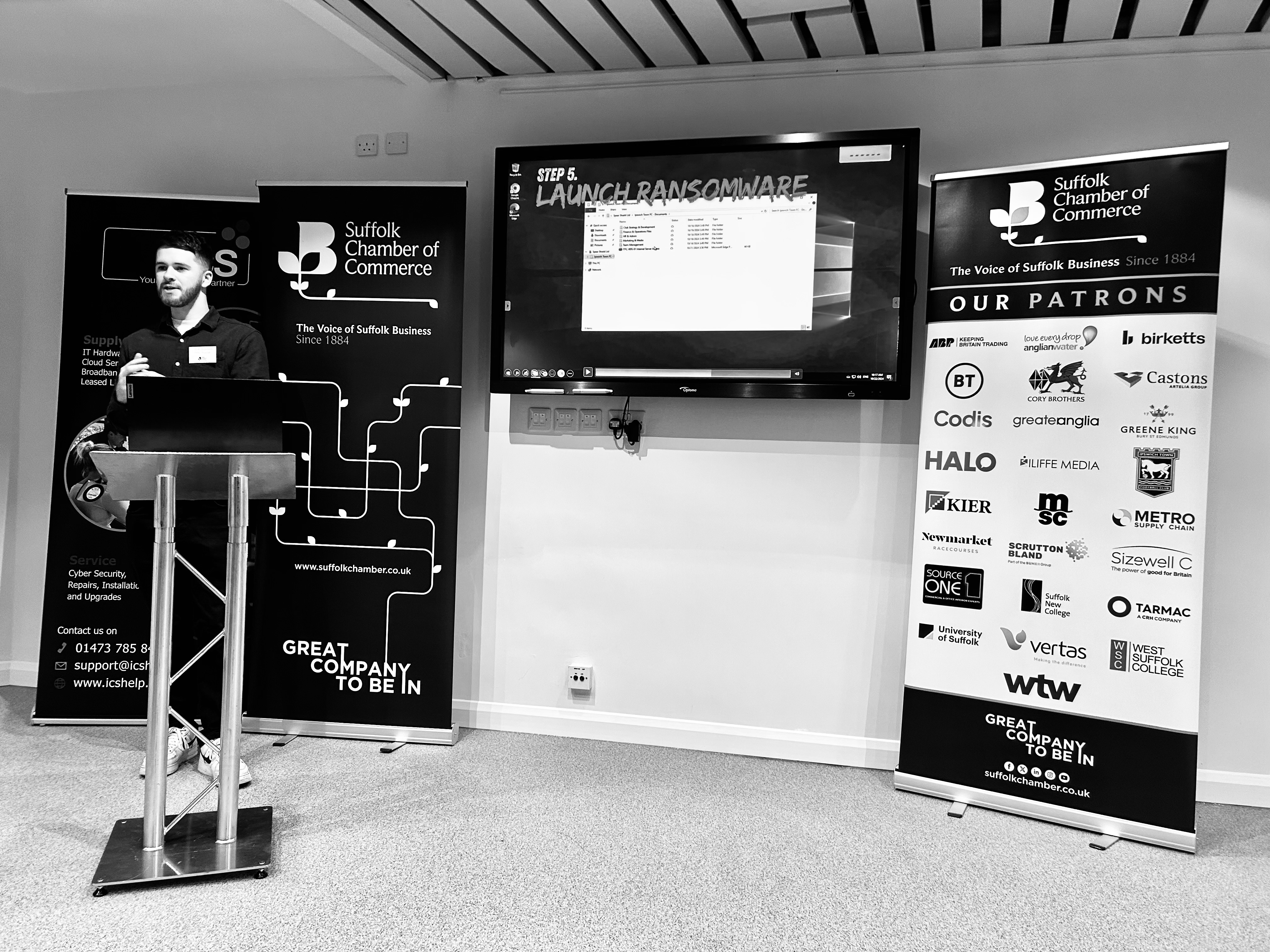
Suffolk Chamber of Commerce
Fresh venues, great speakers, and proper takeaways. No death-by-PowerPoint, no vendor pitches dressed as content.
Our flagship security networking event brings together IT and security leaders across East Anglia for candid conversations about real threats, practical defences, and the human side of security.
Seven editions in and counting. Part networking, part knowledge-sharing, entirely enjoyable. Good food, good people, and an honest conversation about where security is heading.
Smaller, more intimate sessions designed for C-suite and senior leadership. The focus is on articulating security risk in business terms - and giving executives the language to lead on it.
Don't get stuck in a cyber bunker. Relaxed rounds at great courses across the region - free to attend, no pitch on the fairway, just honest conversation between holes.
Find out more →
We're lining up fresh venues, great speakers, and sessions worth attending. New dates dropping soon.
Get notifiedDon't get stuck in a cyber bunker. Score a hole in one on your cybersecurity strategy with a trusted partner by your side.
Koncise Cybersecuri-tee Golf Club
We find it's a great way to get to know clients in a more informal environment. Luckily, we're better at our day jobs than we are as golfers.
The Koncise Cybersecuri-tee Golf Club is open to IT leaders, security professionals, and senior business decision-makers. No vendor pitches on the fairway - just honest conversation, a good walk, and the occasional shanked iron.
No autoresponders. No generic pitches. A personal reply from a real human - with a couple of sensible questions.
"For 14 years, we've operated on one principle: do right by customers, even when it conflicts with short-term revenue."
"Ben and his team are extremely customer-focused and pride themselves on forming strong relationships. They advise in an impartial way - genuinely second to none."
These Terms & Conditions govern the provision of services by Koncise Solutions Limited (“Koncise”) to the customer named in the applicable Quote (together, this “Agreement”). This Agreement is self-contained. Where a Quote references third-party vendor products or services, the applicable vendor terms will be identified in the Quote and, where expressly incorporated, shall form part of the Agreement in respect of those vendor products only. No other external terms shall apply unless specifically attached to and expressly incorporated into the signed Quote.
1.1 Customer agrees to pay the fees set out in the applicable Quote by bank transfer in accordance with the invoice instructions. Invoices will be issued on the date of signature and payment is due within the number of days stated on the quote.
1.2 Prices exclude VAT, which will be charged at the applicable rate. All pricing is fixed as set out in the Quote. No additional charges, overage fees or scope-based uplifts may be introduced without Customer’s prior written approval.
1.3 Customer may withhold amounts that are genuinely disputed in good faith, provided that: (a) undisputed amounts remain payable in accordance with the payment terms set out above; (b) the basis of any invoice query is raised in writing within 10 business days of receipt of that invoice; and (c) nothing in this clause shall prevent either party from bringing wider contractual claims in respect of matters that come to light after that period.
1.4 Amounts not paid when due shall accrue interest at 1.5% per month or the highest rate permitted by applicable law, whichever is lower, from the date due until the date paid.
This Agreement will automatically renew at the end of the Subscription Period unless a written request to cancel is received by Koncise from Customer no less than 30 days prior to the renewal date. Cancellation requests must be submitted by email to renewals@koncisesolutions.com.
3.1 Koncise shall provide the services with reasonable skill and care and in all material respects in accordance with the agreed scope set out in this Agreement.
3.2 If Customer notifies Koncise in writing of any material failure of the services to conform to the agreed scope, Koncise shall use reasonable endeavours to investigate and remedy such failure within 10 business days of notification, unless the nature of the issue reasonably requires a longer resolution period, in which case Koncise shall communicate a revised timeline promptly.
3.3 Koncise shall not be liable for any failure or delay caused by Customer’s systems, Customer delay or inaccuracy, or any third-party platform outage outside Koncise’s reasonable control, provided that Koncise remains responsible for managing the Koncise-delivered elements of the services with reasonable skill and care.
4.1 Each party undertakes to keep confidential all confidential information received from the other party in connection with this Agreement and not to use such information for any purpose other than the performance or receipt of the services under this Agreement.
4.2 Each party shall disclose the other party’s confidential information only to those of its employees, contractors or advisers who have a genuine need to know it for the purposes of this Agreement, and shall ensure that such persons are subject to equivalent obligations of confidentiality.
4.3 Neither party shall disclose the other’s confidential information to any third party without the other’s prior written consent, save where required by law or regulation, or where the information is already in the public domain through no fault of the receiving party.
4.4 On termination or expiry of this Agreement, each party shall, on request, promptly return or securely delete all confidential information of the other party, and confirm in writing that it has done so.
4.5 The obligations in this clause shall survive termination or expiry of this Agreement for a period of two years.
5.1 To the extent that Koncise processes personal data on behalf of Customer in delivering the services, Customer is the data controller and Koncise is the data processor, each as defined under the UK GDPR and the Data Protection Act 2018. The categories of personal data and purposes of processing will be as set out in the applicable Quote or as otherwise agreed in writing between the parties.
5.2 Koncise shall: (a) process personal data only on Customer’s documented instructions and solely for the purpose of delivering the services; (b) implement appropriate technical and organisational measures to protect personal data against unauthorised or unlawful processing, accidental loss, destruction or damage; (c) not transfer personal data outside the UK or EEA without Customer’s prior written consent; (d) assist Customer in meeting its obligations under applicable data protection law, including in relation to data subject rights requests; (e) notify Customer without undue delay on becoming aware of any personal data breach affecting Customer’s personal data; and (f) on termination or expiry of this Agreement, securely delete or return all Customer personal data as directed by Customer.
5.3 Koncise shall not engage any sub-processor in relation to Customer’s personal data without Customer’s prior written consent.
5.4 Each party shall comply with its respective obligations under applicable data protection legislation in connection with this Agreement.
6.1 Nothing in this Agreement excludes or limits either party’s liability for: (a) death or personal injury caused by negligence; (b) fraud or fraudulent misrepresentation; or (c) any other liability which cannot lawfully be excluded or limited.
6.2 Subject to clause 6.1, neither party shall be liable to the other for any indirect, consequential, special or punitive loss, or for any loss of profit, loss of revenue, loss of business, loss of goodwill, or loss of anticipated savings.
6.3 For the avoidance of doubt, clause 6.2 does not exclude or limit liability for: (a) breach of the confidentiality obligations in clause 4; (b) breach of the data protection obligations in clause 5; (c) unauthorised use or misuse of Customer’s name, brand or intellectual property; or (d) loss of data arising directly from any such breach or misuse.
6.4 Subject to clauses 6.1 and 6.5, Koncise’s total aggregate liability to Customer arising out of or in connection with this Agreement, whether in contract, tort (including negligence), misrepresentation or otherwise, shall not exceed 100% of the total fees paid or payable by Customer under this Agreement.
6.5 Koncise’s aggregate liability arising from breach of clause 4 (Confidentiality) or clause 5 (Data Protection) shall not exceed 150% of the total fees paid or payable by Customer under this Agreement.
6.6 Where the Agreement includes third-party vendor products or services, Koncise’s liability in respect of those products or services is limited to using reasonable endeavours to enforce any warranty or remedy available under the applicable vendor terms. Koncise accepts no liability for failures, defects or losses arising from vendor products beyond this.
7.1 Either party may terminate this Agreement on written notice if the other party: (a) commits a material breach of this Agreement and (where the breach is capable of remedy) fails to remedy it within 14 days of receiving written notice requiring it to do so; (b) becomes insolvent, enters administration, receivership, liquidation or makes any arrangement with its creditors; or (c) persistently fails to meet its material obligations under this Agreement in a manner that cannot reasonably be remedied.
7.2 On termination by Customer under clause 7.1, Koncise shall refund a pro-rata proportion of any prepaid fees relating to Koncise-delivered services not yet provided as at the effective date of termination. Fees relating to third-party vendor products are subject to the refund terms of the applicable vendor.
7.3 Termination shall not affect any accrued rights or liabilities of either party as at the date of termination, nor shall it affect any provisions of this Agreement that are expressed or implied to survive termination.
Koncise’s Privacy Policy is available at our Privacy Policy and describes Koncise’s general data handling practices. To the extent of any conflict between the Privacy Policy and the express terms of this Agreement (including clause 5), the express terms of this Agreement shall prevail.
Koncise shall not use Customer’s name, logo, or refer to Customer publicly as a customer or user of the services without Customer’s prior written consent. This clause shall survive termination of this Agreement.
Neither party may assign this Agreement or any of its rights or obligations under it without the other party’s prior written consent, save that either party may assign without consent in connection with an intra-group reorganisation, affiliate transfer, or a sale of the whole or substantially the whole of its business to which this Agreement relates, provided that the assigning party gives prompt written notice of any such assignment.
Any dispute arising out of or in connection with this Agreement shall be referred first to senior representatives of both parties for good faith resolution. If not resolved within 20 business days, either party may pursue its legal remedies. Nothing in this clause prevents either party from seeking urgent interim relief from a court of competent jurisdiction.
This Agreement and all matters arising out of or in connection with it (including non-contractual disputes) are governed by the laws of England and Wales. The courts of England and Wales shall have exclusive jurisdiction to settle any disputes arising out of or in connection with this Agreement.
Koncise Solutions Limited (“Koncise”, “we”, “us”, “our”) is committed to protecting the privacy and security of your personal data. We are a cybersecurity consultancy and managed services provider, and we take the handling of information - yours and your organisation’s - as seriously as we expect our customers to.
This Privacy Policy explains what personal data we collect, why we collect it, how we use it, and your rights in relation to it. It applies to data collected through our website, in the course of providing our services, and through any other interaction you have with us.
This policy is effective from March 2026 and supersedes any previous privacy policies issued by Koncise Solutions Limited.
Koncise Solutions Limited is a UK-based cybersecurity specialist working with 170+ organisations across the UK, protecting over 100,000 users globally. Headquartered in Borehamwood with offices in Ipswich, we serve clients across the UK with a consultative, people-first approach to security.
Our services span the full security lifecycle - from managed phishing simulations and human risk training, to 24/7 MDR, endpoint protection, identity and access management, data security, and compliance frameworks including Cyber Essentials, ISO 27001, and NCSC CAF.
For the purposes of UK data protection law, Koncise Solutions Limited is the data controller in respect of personal data collected in connection with our general business operations, website, and marketing activities.
Where we process personal data on behalf of a client as part of delivering contracted services (for example, employee data provided to us for the purpose of running phishing simulations), we act as a data processor, and the client remains the data controller.
Customer and prospect contacts
In the course of our business, we collect and process the following categories of personal data:
Managed phishing simulation services
Where we deliver managed phishing simulations on behalf of a client, we process the following personal data belonging to the client’s employees, solely for the purpose of delivering the service:
This data is provided by the client and processed strictly in accordance with their instructions and the terms of our service agreement. It is not used for any other purpose.
Website visitors
When you visit our website, we may collect standard technical data including IP address, browser type, and pages visited, via cookies and analytics tools. Please refer to our Cookies Policy for further detail.
We process personal data on the following legal bases under UK GDPR:
We use personal data for the following purposes:
We do not sell, rent, or trade personal data. We may share data in the following limited circumstances:
Any third parties with whom we share data are required to handle it securely and only for the purposes for which it was shared.
We do not transfer personal data outside the UK or EEA. If this were ever to change, we would notify affected individuals and ensure appropriate safeguards are in place.
We retain personal data only for as long as necessary for the purpose for which it was collected, or as required by law. Our standard retention periods are:
When data reaches the end of its retention period, it is securely deleted or destroyed in accordance with our Data Deletion and Destruction Policy.
Under UK GDPR, you have the following rights in relation to your personal data:
To exercise any of these rights, please contact us at info@koncisesolutions.com. We will respond within 30 days of receipt of a valid request. There is no charge for making a request, unless requests are manifestly unfounded or excessive.
If you have concerns about how we handle your personal data, please contact us in the first instance at info@koncisesolutions.com. We take all complaints seriously and will respond promptly.
You also have the right to lodge a complaint with the UK Information Commissioner’s Office (ICO):
We implement appropriate technical and organisational measures to protect personal data against unauthorised access, loss, destruction, or disclosure. All staff with access to personal data are subject to confidentiality obligations and receive appropriate training.
In the event of a personal data breach that is likely to result in a risk to individuals’ rights and freedoms, we will notify the ICO within 72 hours and, where required, inform affected individuals without undue delay.
Our website uses cookies to analyse traffic and improve user experience. We use Google Analytics for this purpose, which may process data on servers outside the UK. You can manage cookie preferences through your browser settings. Please see our separate Cookies Policy for full details.
We may update this Privacy Policy from time to time. The current version will always be available on our website at koncisesolutions.com. Where changes are material, we will notify affected customers directly.
Last updated: April 2026 · Koncise Solutions Limited · Company No. 07789203
We’re a growing cybersecurity consultancy helping businesses across the UK understand and improve their security posture. We’re not actively recruiting at the moment, but we’re always glad to hear from people who are serious about their craft - so the roles below stay here for context, and the door stays open.
Offensive Security · Borehamwood / Ipswich / Hybrid · Full-Time
Security testing is becoming a core part of what Koncise delivers, and we’re looking for someone to lead that practice as it scales. As Chief Hacking Officer, you will take ownership of our penetration testing capability - shaping the methodology, building the team around you, and delivering high-quality offensive engagements for a client base that already trusts us with their detection, identity and email security.
This is a rare opportunity to build something properly: your own practice, your own approach, an existing client base to deliver into, and a leadership team that understands security and gives you the room to do the work well.
Client Relationships · Borehamwood / Ipswich / Hybrid · Full-Time
Account Management at Koncise looks different to most. We’ve held a 99% retention rate for fourteen years by doing right by customers even when it costs us short-term revenue - so this is a role about understanding a client’s security position properly and helping them make good decisions, not about working a pipeline.
You’d own a portfolio of existing relationships, get genuinely close to what those organisations are trying to achieve, and bring in the right specialists at the right time.
We’re not recruiting for either role right now, but we’re always open to hearing from great people. If you think you’d be a good fit for Koncise - whether that’s one of the roles above or something we haven’t thought of - send us your details through our contact page.
Applications are read personally by our leadership team. There’s no ATS and no automated screening, and we’ll keep good applications on file for when something does open up.
Send Us Your Details →Enter your work email and we'll instantly score your domain's protection against phishing, spoofing and impersonation. Free. No obligation.
Enter your work email below. We'll analyse your domain across impersonation protection, email privacy and branding - and give you an instant score out of 100.
Your Domain Score
Your email is used solely to identify your domain. We won't add you to a mailing list without your consent.
Score below 80?We'll walk you through exactly what needs fixing.
Every domain gets a score out of 100 based on its email authentication configuration. The score reflects how well your domain is protected against three categories of threat:
Your domain is well-configured. Email impersonation risk is low, your communications are private, and recipients see your branding. Keep it maintained.
Some protections are in place, but gaps remain. Criminals could still exploit your domain. Closing these gaps improves deliverability and reduces risk.
Little to no protection. Your domain can be used by cybercriminals to send fraudulent emails in your name - putting your brand and customers at serious risk.
Without DMARC enforcement, anyone can send emails that appear to come from your domain. Customers, suppliers and staff can all be targeted - in your name.
Emails without MTA-STS and TLS-RPT policies can be intercepted in transit. Sensitive communications - contracts, credentials, invoices - are readable by attackers.
Domains without proper authentication score lower with email providers. Your legitimate emails are more likely to land in spam - and less likely to be trusted.
DMARC (Domain-based Message Authentication, Reporting and Conformance) is an email authentication protocol that tells receiving mail servers what to do when an email claims to come from your domain but fails authentication checks. A DMARC policy protects your domain from being used in phishing and impersonation attacks. Without it, cybercriminals can send emails that appear to come from your company - targeting your customers, suppliers and staff. DMARC also generates reporting data that tells you exactly who is sending email on your behalf, giving you visibility into your entire email ecosystem.
The DMARC policy tag p= controls how receiving mail servers handle emails that fail authentication. p=none monitors email traffic but takes no action - your domain can still be spoofed freely. p=quarantine routes failing emails to spam folders, reducing but not eliminating risk. p=reject is full enforcement - unauthenticated emails claiming to be from your domain are blocked entirely before reaching the inbox. Most cybersecurity advisors recommend progressing to p=reject for maximum protection, but the transition requires careful analysis of all legitimate sending sources to avoid blocking genuine emails.
Yes - if your domain has no DMARC policy, or only p=none, email impersonation (also called domain spoofing) is technically straightforward for attackers. Anyone can forge the "From:" address in an email to display your company's domain. This is one of the most common methods used in business email compromise (BEC) attacks, supplier fraud, and phishing campaigns. Victims receive emails that look entirely legitimate - correct domain, correct branding - and are instructed to transfer funds, share credentials, or click malicious links. Your domain health score directly reflects your exposure to this risk.
SPF (Sender Policy Framework) is a DNS record that lists the mail servers authorised to send email on behalf of your domain. When a receiving server gets an email claiming to be from your domain, it checks your SPF record. If the sending server isn't listed, the email fails SPF. However, SPF alone does not prevent impersonation - it only checks the "envelope from" address, not the visible "From:" header. DMARC is needed to act on SPF failures and apply a policy. A common SPF misconfiguration is having too many DNS lookups (over 10), which causes lookup failures and can quietly break email authentication.
DKIM (DomainKeys Identified Mail) adds a cryptographic digital signature to outgoing emails, verified by recipients against a public key published in your DNS. It proves two things: that the email genuinely originated from your organisation, and that it hasn't been tampered with in transit. Like SPF, DKIM alone doesn't stop impersonation - it needs to work alongside DMARC, which enforces action when DKIM signatures are missing or invalid. A key operational issue is rotating DKIM keys: old or shared keys across multiple services can weaken authentication without the domain owner realising.
BIMI (Brand Indicators for Message Identification) is an email standard that displays your verified brand logo next to your emails in supporting inboxes - including Gmail, Yahoo and Apple Mail. Achieving BIMI requires a DMARC policy at p=quarantine or p=reject, a correctly formatted SVG logo, and in most major email clients a Verified Mark Certificate (VMC) from a trusted Certificate Authority. The business benefits are significant: instant brand recognition in the inbox, a visible signal that the email is genuine, and measurable improvements in open rates. BIMI is increasingly used by security-conscious organisations to differentiate their communications from spoofed emails.
Email providers including Google, Microsoft and Yahoo use domain authentication signals - SPF, DKIM and DMARC - to assess the trustworthiness of incoming email. In 2024, Google and Yahoo made DMARC a mandatory requirement for bulk senders. Domains with missing or misconfigured authentication are significantly more likely to be routed to spam, rate-limited, or blocked entirely by receiving mail servers. A properly authenticated domain with a strong DMARC policy improves inbox placement because receiving servers have strong evidence the email is legitimate. Poor deliverability isn't just a marketing problem - it affects transactional emails, invoices and operational communications too.
MTA-STS (Mail Transfer Agent Strict Transport Security) is a security mechanism that forces mail servers communicating with your domain to use encrypted TLS connections. Without it, email traffic between mail servers can be subject to downgrade attacks - where an attacker forces a connection to fall back to unencrypted transmission, making emails readable in transit. MTA-STS works alongside TLS-RPT (Transport Layer Security Reporting), which sends you diagnostic reports when TLS connections to your domain fail. Together they protect the privacy and integrity of emails in transit, not just at the point of sending or receiving.
Think of them as three layers of email authentication that work together. SPF lists the servers permitted to send email from your domain. DKIM adds a cryptographic signature to prove the email is genuine and unaltered. DMARC is the enforcement layer - it ties SPF and DKIM together, tells receiving servers what to do when emails fail those checks (deliver, quarantine or reject), and sends you reports on authentication activity across your domain. Having SPF and DKIM without DMARC still leaves your domain vulnerable because there is no mechanism to act on authentication failures.
Improving your score follows a structured sequence: publish a valid SPF record listing all authorised mail senders; enable DKIM signing on every outbound mail stream (including third-party tools like your CRM, marketing platform and ticketing system); deploy DMARC starting at p=none to monitor, then progress through p=quarantine to p=reject once all legitimate senders are identified and authorised; implement MTA-STS to enforce encrypted email transit; and optionally add a BIMI record to display your logo in supporting inboxes. The most common mistake is attempting to jump straight to p=reject without first analysing DMARC reports - this risks blocking legitimate email. Koncise manages this entire process as part of our DMARC managed service.
A DMARC managed service handles the full lifecycle of email authentication on your behalf. This includes initial deployment at p=none, ongoing analysis of DMARC aggregate and forensic reports, identification and authorisation of every legitimate sending source, and safe progression to full enforcement at p=reject. Managing DMARC without expert help requires interpreting XML report files, understanding the email ecosystem of your entire organisation, and carefully coordinating changes with third-party sending services. A managed service removes this complexity while ensuring nothing legitimate is disrupted during the transition to full enforcement.
DNS changes propagate globally within 24-48 hours, so technical changes take effect quickly. However, safely moving from p=none to p=reject requires collecting and analysing DMARC aggregate reports over several weeks to identify every source sending email from your domain - including third-party tools your team may have connected without IT's knowledge. Rushing to enforcement risks blocking legitimate emails from services like Salesforce, Mailchimp, DocuSign or your finance system. For most organisations, Koncise achieves full p=reject enforcement within 60-90 days, depending on the complexity of the email ecosystem. Organisations with simpler setups can reach enforcement faster.
Your domain score shows your technical exposure. A free managed phishing simulation reveals your human risk. Together, they give your leadership team a clear, evidence-based picture of where your business is vulnerable - at no cost and with no obligation.
Gain insight into risk and your users' security behaviours - with full reporting, behavioural analysis, and no strings attached.
"Phishing is the most effective attack vector for cybercriminals, yet too many businesses rely on off-the-shelf phishing templates that don't reflect real-world threats. At Koncise, we take a spear phishing approach, crafting highly targeted simulations that mimic the tactics we see attackers using in the wild. This free managed phishing campaign isn't just about seeing who clicks - it's about understanding user behaviours, identifying real risks, and providing actionable insights that you can articulate back to your business. And there's no catch - this is simply a chance to experience working with us first-hand."
In 2024, there was a 52.2% increase in the number of attacks that got through Secure Email Gateway (SEG) detection and a 50.9% increase in attacks bypassing Microsoft's native defences.
61% of the root cause of ransomware attacks in 2024 was introduced through 'human-activated risk'. Compromised credentials, malicious emails, phishing, downloads and more.
The median time to click a malicious link after opening the email is 21 seconds - then only 28 more to enter credentials. The median time to fall for a phishing email is less than 60 seconds.
Campaigns built on real-world phishing we see in the wild - not generic off-the-shelf templates. Every simulation is tailored to mimic the tactics attackers are actually using against businesses like yours.
Includes Click-Rate %, Credential Harvest %, Industry Benchmarking, Device Type Breakdown, User Behaviour Analysis, and Consultative Recommendations - ready to present straight to your board.
No internal resource required. We handle scoping, template selection, whitelisting, scheduling, tracking, and reporting end to end. Designed to scale without adding to your workload.
I have been working with Koncise for the past 2 years understanding human risk through their phishing simulation service and I can say the service has been thoroughly professional and second to none - which has culminated in a tangible reduction in insider threat risk. I also congratulate Koncise for their passion and work elevating the importance of cyber security in our local and national business communities.Kevin W.
We discuss campaign ideas together - tailoring the simulation to reflect real threats relevant to your sector and organisation.
Send us a CSV with your user details. That's all we need to get started on configuration and delivery.
We handle all whitelisting and test delivery to ensure accurate results - no false positives, no missed clicks.
We agree the campaign timing together and handle everything from here - delivery, tracking, and data collection.
We present the full results together - with actionable recommendations you can take straight back to your business and board.
Want to learn more about our free managed phishing campaign and how it can help uncover human risk in your organisation? Book a session with our CCO, Max Harper, to walk through the details, what's included, and how we tailor the simulation to mimic real-world attacks.
We'll cover:
And if he's not too busy phishing our customers, we'll loop in our CTO, Josh, to share his expertise too!
This is simply a chance to experience working with us first-hand. We believe that once you see the quality of our reporting and the clarity of our insights, the value of having Koncise as a cybersecurity partner speaks for itself.
No sales pressure. No obligation. Just real data about your real risk.
Straight-talking cybersecurity insight on phishing, human risk, and the threats that actually matter.
View the BlogA free managed phishing simulation reveals your human risk. Combine it with a free email health check and you'll give your leadership team a clear, evidence-based picture of where your business is exposed - at no cost and with no obligation.
Already using an MDR provider? Find out whether your security controls, detection visibility, and response capability would genuinely stand up under real-world pressure.
Many organisations invest in MDR expecting 24/7 protection, but few ever properly test whether their existing provider can detect meaningful threats across identity, cloud, endpoint, and user activity.
If your environment contains stale accounts, over-privileged users, weak MFA coverage, exposed remote access, or poor visibility into Microsoft 365, your MDR may be missing some of the risks that matter most - and you could be paying for monitoring without knowing whether it would truly help when it counts.
Questions worth asking
Test Your MDR combines two complementary services into one focused engagement:
We assess the areas attackers commonly exploit and many incumbent providers fail to properly surface. A rigorous, evidence-led review of your security posture, monitoring coverage, and the visibility gaps most likely to matter when it counts.
We validate your real-world resilience through controlled testing designed to identify exploitable weaknesses and determine whether your monitoring and response capability would actually detect, escalate, and act on meaningful attacker behaviour.
Our exposure and detection review covers the areas most commonly missed by incumbent MDR providers:
Review of admin accounts, service accounts, and identity paths that represent elevated risk if compromised.
Identification of dormant, unused, or poorly managed accounts creating unnecessary attack surface.
Analysis of authentication gaps, MFA bypass risks, and inconsistent conditional access policies.
Review of sign-in behaviour, anomalous access patterns, and impossible travel indicators.
Assessment of M365 monitoring coverage, alert configuration, and logging gaps across your tenant.
Identification of externally exposed services, remote access risks, and attack surface reduction opportunities.
Mapping of coverage gaps across key attack paths - particularly those your current MDR may not be tuned to detect.
Practical exploitation attempts to validate whether weaknesses can be exploited and whether your monitoring would respond appropriately.
Every Test Your MDR engagement delivers clear, actionable findings - not a generic report.
This assessment is well-suited for organisations that:
These are the most frequent gaps we identify during a Test Your MDR engagement:
Monitoring focused too heavily on endpoint alone - with limited visibility across identity and cloud activity
Limited visibility into identity-based threats, including compromised credentials and lateral movement
Stale or over-privileged accounts creating unnecessary risk that isn’t actively monitored
Inconsistent MFA adoption, with conditional access gaps leaving authentication exposed
Weak controls around remote access and externally exposed services
Significant gaps in Microsoft 365 monitoring - detections that exist on paper but aren’t tuned to the real environment
The purpose of Test Your MDR is straightforward: to give you a clearer picture of how well your current security operation is genuinely performing.
In some cases, the outcome is reassurance. In others, it highlights important gaps in visibility, control, and response that need addressing - gaps that are far better found by us than discovered by an attacker.
Either way, you leave with practical findings, evidence-based recommendations, and a stronger understanding of your current position - whatever you choose to do next.
Book a Test Your MDR consultation and we’ll walk you through the scope, likely focus areas, and how the engagement can help you validate your existing setup - before renewal, before change, or simply to build confidence in what you have.
Detection validation is one of three ways we test. There is also penetration testing and adversary simulation.
A free, managed AI Risk Assessment gives you instant visibility into how AI is really being used across your organisation - from sanctioned tools to shadow AI - and exactly what sensitive data is leaving your control.
Most organisations have no idea how many AI tools their people are using, what data is being entered, or where that data ends up. The assessment changes that - in days, not months.
78% of employees access AI at work via personal tools - outside of any IT visibility, policy, or control. What's being typed into those tools is rarely tracked.
Source: Microsoft
More than half of employees are using AI tools without IT oversight or company approval. That's sensitive business data going somewhere nobody has audited.
Source: BCG
96% of executives expect an AI-related security breach within three years. The assessment tells you where your organisation stands right now - before an incident forces the question.
Source: IBM
The assessment runs quietly in the background - lightweight, privacy-first, and non-intrusive. Here's what happens from deployment to debrief.
A lightweight browser-based deployment means no complex onboarding, no infrastructure changes, and no disruption to your team. You're up and running fast.
Across sanctioned platforms, embedded SaaS features, and shadow tools your IT team didn't even know about. Nothing is missed - including AI features baked into tools you already use.
Prompts, files, frequency, data sensitivity, and user patterns - giving you a forensic picture of how AI is actually being used, not just what tools are installed.
Risk is mapped by user, data type, and behaviour pattern - so you can see not just what's happening, but who is driving the highest-risk activity and what data is most exposed.
Credentials pasted into AI tools. Source code shared externally. Confidential contracts uploaded. The assessment surfaces the kind of incidents that most organisations only discover after the damage is done.
You receive a clear, leadership-ready report from the Koncise team - not just a dashboard login. We walk you through the findings and recommend your next steps.
The assessment produces a clear breakdown across six areas - giving your IT, security, and compliance leads the evidence they need to make informed decisions about AI governance.
A complete inventory of every AI tool in active use - sanctioned and unsanctioned - across your estate. Most organisations are surprised by the volume.
How many of your people are actively using AI tools, across which departments, and at what frequency - giving you an accurate baseline for policy and training decisions.
Every category of sensitive data that has been entered into AI tools - HR records, legal details, financial data, infrastructure documentation, and more - mapped to the specific apps receiving it.
The critical events that demand immediate attention - credentials shared with AI tools, confidential strategy documents uploaded, source code exposed to external platforms.
Where your data is being processed and stored by AI tools - including tools that process data in jurisdictions that may not align with your compliance obligations under UK GDPR or client contracts.
Not a list of problems - a sequenced action plan. Immediate steps to close critical gaps, and longer-term recommendations for sustainable AI governance without blocking productivity.
No cost. No commitment. Just a clear picture of your AI risk - and a conversation about what to do next.
Book Your Free AI Risk Assessment